|
Blog
Wine, craft beer and spirits have unique needs: short runs, limited editions, premium finishes and cold resistance. Here's why it pays to print beverage labels in-house with digital printing.
In beverages, the label isn't a detail: it's the first thing that speaks to the customer on the shelf and tells the origin, vintage, story and character of the product. Wine, craft beer, spirits and drinks, however, have very particular needs — short runs, many product lines, limited editions and fine finishes — that traditional printing handles poorly. In this guide we look at why the label is so strategic in beverages and how to produce it in-house with digital printing, even in small numbers.
On a crowded shelf, the label does much of the selling: it communicates positioning (craft, premium, organic), sets a winery or brewery apart from competitors and conveys vintage, type and origin at a glance. For wine and beer, where the purchase is often impulsive and tied to aesthetics, a well-crafted label is worth as much as the product it holds.
This sector has features that make it different from all the others:
Digital printing overturns the limits of offset and flexo precisely where beverages struggle most: no setup costs, so even a few hundred labels for a new vintage or a special brew become viable. You change the artwork on every product line with no penalty and, thanks to variable data, you can number the bottles of a limited edition or handle different batches and wording on every piece, in a single pass together with the artwork.
The result is a responsiveness that doesn't exist with an external supplier: you update a vintage or launch a limited series the same day, with no minimum orders and without stocking labels destined to become obsolete.
For wine and spirits, the perception of quality often comes down to the finishes. Beyond colour printing, you can add premium effects such as hot gold foil or embossing: if you want to explore when it's worth it, we cover it in our article on hot foil stamping. The choice of material also makes a difference — textured papers, special adhesives and laminations: you'll find a full overview in the guide to materials and finishes for adhesive labels.
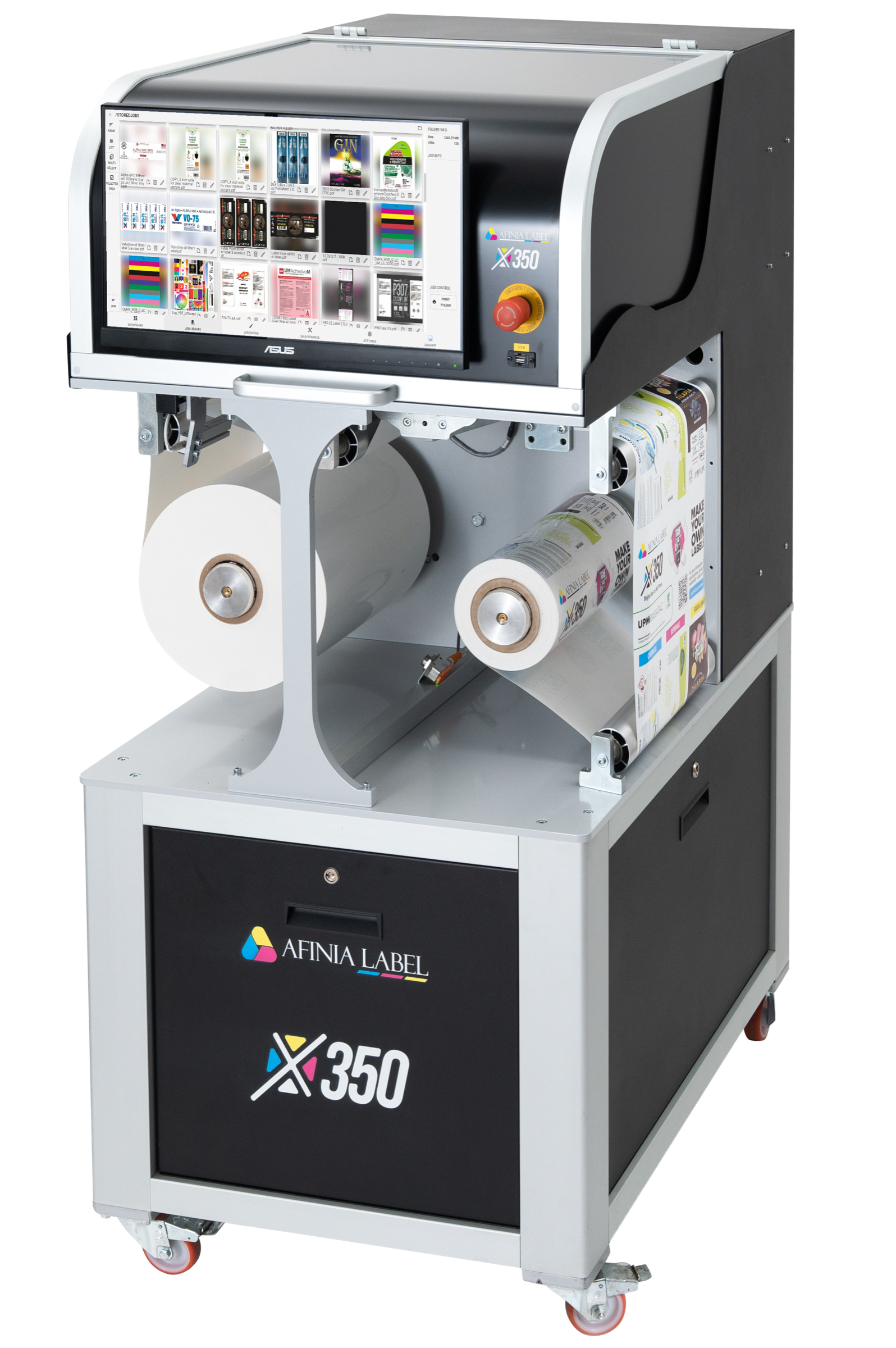
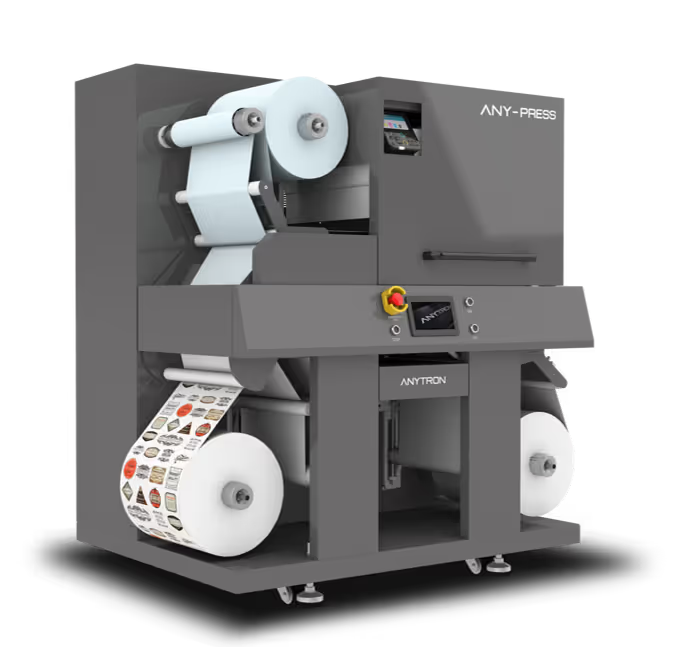
For colour beverage labels there are two main routes, with different results. Water-based Memjet inkjet — like the Afinia X350 — offers bright colours and good speed, suited to volume and the rich artwork typical of wine. LED toner — like the Any-Press, with CMYK plus white — produces labels that are more resistant to humidity and rubbing and is ideal on kraft papers too, widely used for craft beer. The choice depends on the material, the environment the bottle will end up in (fridge, ice bucket, cellar) and the volumes: the safest way to decide is to test the technologies on your own real materials. To weigh up the options, our guide on how to choose a roll label printer can also help.
Bringing printing in-house changes the way a winery or brewery works: you produce only what you need when you need it, launch numbered limited editions with no minimums, update a vintage or fix a piece of wording the same day and drastically cut stock. The label stops being a logistical constraint and becomes a marketing lever managed in-house.
In beverages, the label sells as much as the product: with digital printing you can produce labels for wine, beer and spirits in short runs, with premium finishes and variable-data numbering, updating vintages and editions the same day and with no minimum orders.
If you'd like to evaluate the right solution for your bottles, contact us for a free consultation or come and print your labels live at our Demo Center in Sesto San Giovanni (Milan) — 📞 02 4943 9417. Discover all our digital printing solutions.
Print Solution products related to this article's topic